Understand the background
We help you work out why your change initiative is moving more slowly than you'd like, and together we find concrete ways to move it forward with a real chance of success.

You know exactly what you want to change, and you have the technical side well in hand. We help you understand people's concerns and bring them on board. That's how you lay the groundwork for change that lasts.
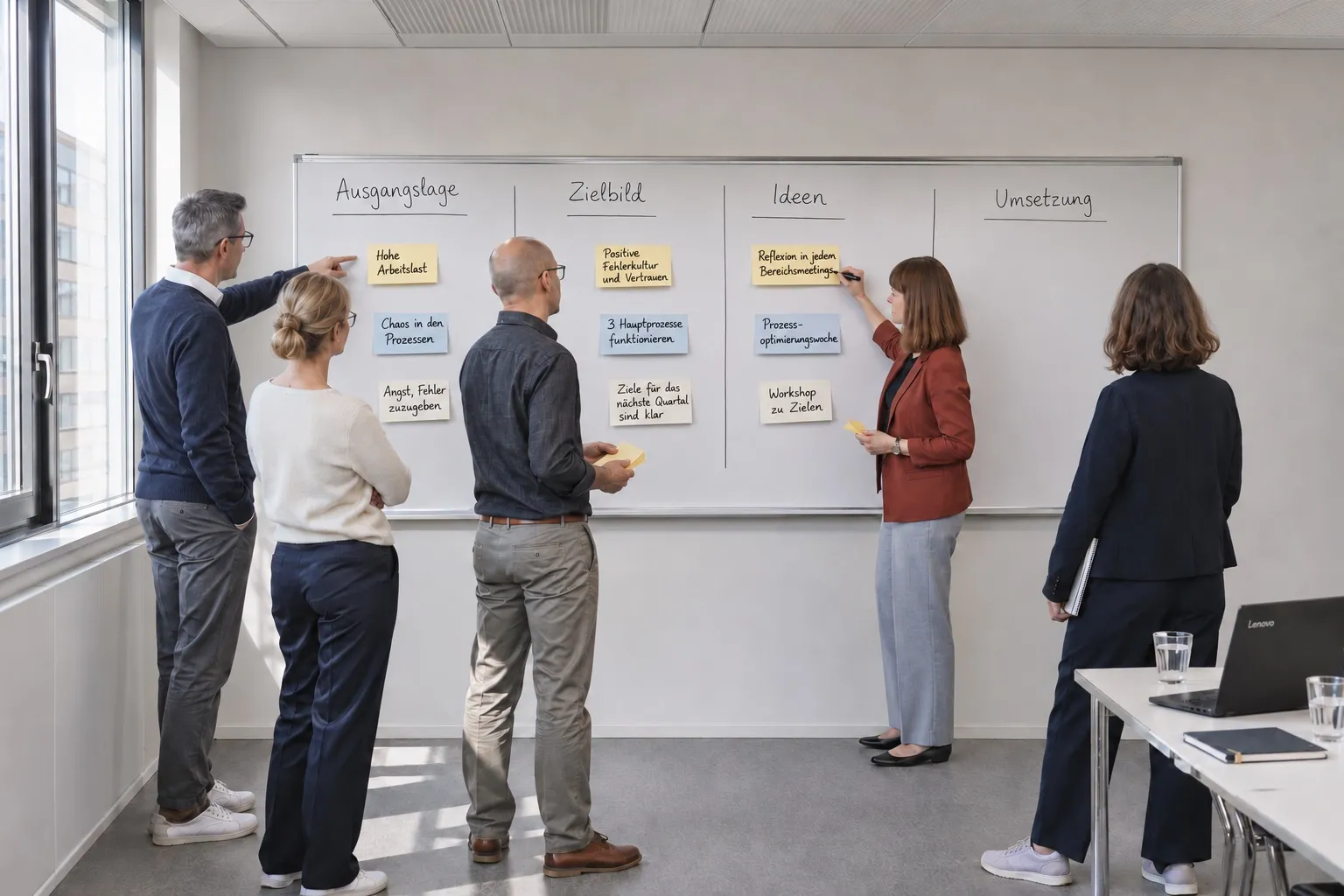
We help you work out why your change initiative is moving more slowly than you'd like, and together we find concrete ways to move it forward with a real chance of success.
We help you build acceptance for the change, step by step. From your picture of where you're heading, we shape a clear, relatable story that gives people direction.
We work out concrete steps to embed the new processes and behaviours in everyday work, and help shape the environment so the change lasts.
From the research
of change initiatives reach their goals when leaders actively back them. Without that support, only 27% do.
Source: Prosci, Best Practices in Change Management (12th edition).
 Trust is the most important foundation for change — and building it is easier than you think.
 Try a small step early rather than waiting for the perfect plan.
 Small wins create the positive energy that sets bigger change in motion.
Our change consulting helps leaders prepare a specific change and embed it in everyday work. We clarify the starting point, develop a clear picture of the future with you and make the next steps concrete. In doing so, we take account of how employees respond and how they can be involved. The technical implementation of IT solutions or a detailed process analysis is not part of the service.
The first step is to understand what lies behind the resistance. Together we look at things like open questions, differing expectations, past experiences or concerns about implementation. From there we develop suitable options for conversation and action. The aim is to give direction, take legitimate objections on board and make the next steps possible.